International Women's Day Isn't About Finding Your Best Self. It's About Getting Time Back.

March 8 is two days away, and the internet is already full of "celebrating the strength of women" posts. Curated photos. Gym selfies. Quotes about resilience.
I'm not going to do that.
Not because women don't deserve to be celebrated — they do. But because the fitness industry's version of IWD is mostly a product pitch with a ribbon on it.
Here's what I actually want to say.
The Math Is the Problem, Not the Mindset
I spent ten years teaching middle school in Chicago. Fifty to sixty hours a week, planning lessons at 5 AM, grading until midnight. I used to tell myself I didn't have the discipline for fitness.
Then I looked at my day. (And I learned that you don't have to want to work out in the first place — you just have to start.)
I had discipline. I had structure. I had meticulous planning. I just wasn't applying it to my body.
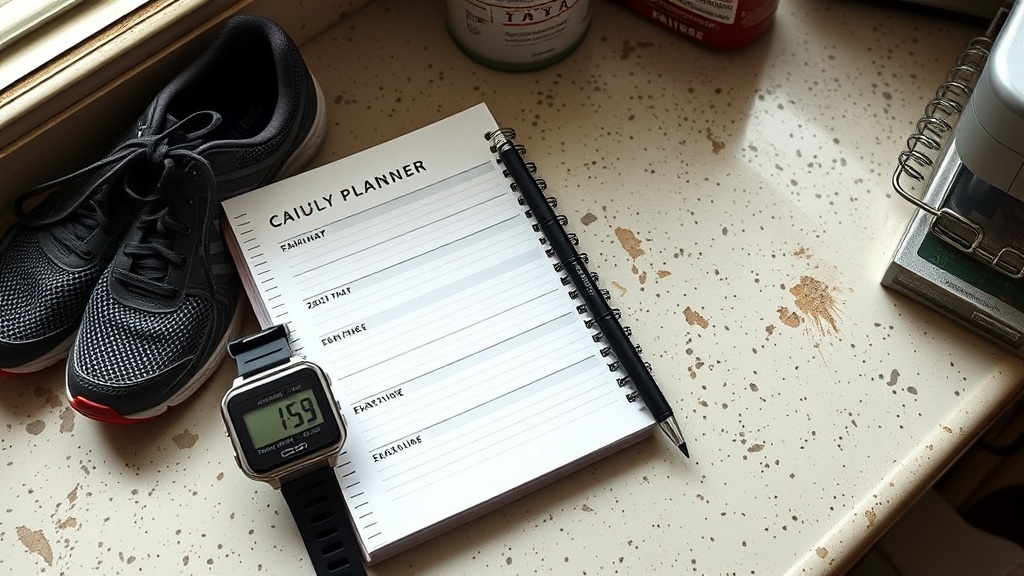
When I finally did — when I started treating workouts like a lesson plan instead of a vibe — things clicked.
But here's what I had to reckon with: I was a man with no kids, living alone. My 60-hour week was all professional labor.
For a lot of women, that math looks completely different.
The unpaid labor gap is real and documented. OECD time-use surveys and peer-reviewed studies in journals like The Lancet and PLOS ONE consistently show women in dual-income households spending roughly 1.5 to 2 additional hours per day on unpaid domestic work — childcare, elder care, household management — compared to male partners. The gap narrows in some Nordic countries and widens in others, but it shows up across income levels and household structures in the data. That's not a feeling. That's time on a clock that doesn't exist in her schedule.
So when someone tells a woman she just needs to "find the motivation" to work out, they're not solving a psychology problem. They're ignoring a math problem.
What the Fitness Industry Gets Wrong About Women
The typical IWD fitness content falls into two buckets.
Bucket 1: Inspiration porn. "You are strong. You are capable. Believe in yourself." Okay. But you can't squat on a motivational quote. The fitness industry's approach to women's training is built on these exact assumptions.
Bucket 2: Community marketing. "Find your tribe. Train with women who lift you up." This is fine, but it often has an unstated price tag — $150/month, 45 minutes each way, requires childcare coordination.
Neither of these addresses the structural reality.
What women actually need isn't more inspiration. It's permission — permission to take 15 minutes as non-negotiable personal time. Not something that gets allocated after everyone else's needs are met. Not a reward for finishing the to-do list.
And they need a system that works in 15 minutes. Because some days that's all there is. This is where the non-negotiable habit framework changes everything.
The 15-Minute Protocol (This Is Not a Consolation Prize)
The protocol is simple: pick one anchor movement, set a 15-minute block, do not negotiate it.
Walking. Bodyweight circuit. One barbell movement — deadlift, squat, press. It doesn't matter which. What matters is that the block is owned.
Here's the principle I learned from lesson planning: the structure of the container matters more than what you put in it. When I planned a 50-minute class, I didn't think "I need 50 perfect minutes." I thought: what are the first five minutes, the last five minutes, and one thing that has to happen in the middle? The rest organized itself.
Same with fitness. If the 15-minute block is real — not aspirational, not contingent on everyone else's schedule being cooperative — then it becomes a foundation. On a good week, 15 minutes becomes 30. But 15 always shows up.
This isn't a compromise. Research on short-bout physical activity — including work published in JAMA and the British Journal of Sports Medicine — shows meaningful cardiovascular and mood benefits from bouts as short as 10–15 minutes when performed consistently. (The evidence on cortisol is more context-dependent and mixed, so I'll leave that one to the researchers to sort out.) Fifteen deliberate minutes, done consistently, does measurable things.
The 60-minute workout you skip three weeks out of four adds up to less than 20 minutes a week. The math isn't complicated.
Reclaim the Space Before You Reclaim the Gram
The fitness industry wants women to find their community, their accountability partner, their aesthetic. Before any of that: reclaim the time.
Not time for a full routine. Time for something. Before the house wakes up. During a lunch break. After drop-off. The window doesn't need to be perfect — it needs to be protected.
This is harder than it sounds. Women are socialized to treat self-care as optional and other-care as mandatory. That inversion doesn't fix itself with a motivational post. It fixes itself with a decision, made once, backed by a calendar block and a low bar.
"I will do 15 minutes of movement. The movement doesn't matter. The 15 minutes is non-negotiable."
That's the whole system.
The Budget Piece

You don't need a $200/month gym membership to make this work. A park bench is a step platform. A backpack with books is a weighted vest. Walking is free and the research backs it up — I've covered that angle before, so I won't retread it here.
The gap between "I want to be healthier" and "I have the resources to be healthier" is real, and it falls disproportionately on women — especially women with kids, women in lower-income brackets, women in neighborhoods without safe sidewalks or green space.
I'm not minimizing that. But within whatever your actual constraints are, the 15-minute protocol is designed to work. Apartment floor. Hotel room. Back porch at 6 AM before anyone else is up.
The equipment list: your body and 15 minutes you refuse to give away.
One Practical Thing to Do This Weekend
Not a goal-setting exercise. Not a vision board. One concrete action:
Find the 15-minute window in your actual schedule and block it on your calendar for the next 7 days.
Not "I'll try to fit it in." Not "if the morning goes well." A block. Named. Recurring.
The workout can be three sets of push-ups and a walk around the block. The block is the win.
International Women's Day isn't about celebrating women who've already figured it out. It's a useful prompt to look at structural barriers and take one concrete step against them.
Fifteen minutes. Non-negotiable. That's the move.
Leo Vargas is a former Chicago public school teacher who lost 40lbs during a 60-hour workweek by applying classroom structure to fitness. He writes about building sustainable habits for people with actual lives.