Why Your 4 a.m. Ice Bath Routine Is Just Another All-or-Nothing Trap (And What to Do Instead)
Look, I was scrolling my feed at 5:15 a.m. yesterday—yes, after my alarm went off, yes, before I'd even put my contacts in—and there he was. A guy in his garage, doing pushups at 4:00 a.m. under a single exposed bulb, describing how the "pain of the cold plunge" was the only thing that made him feel alive.
I watched it. I felt that familiar twinge. That voice in my head saying, "See? You don't want it bad enough. You're not committed. You're soft."
Then I made my coffee and remembered I'm a 34-year-old former teacher, not a Navy SEAL auditioning for a Netflix special.
The Morning Routine Industrial Complex
Here's the deal: Morning routines have become the new six-pack. They're performative. They're extreme. And they're designed to make you feel inadequate so you'll buy something to fix it.
I've seen the full spectrum of absurdity in the past year:
- The 3:45 a.m. Club: Wake up before your REM cycle ends, apparently
- The Ice Bath Aficionados: $3,000 tubs to "regulate your nervous system" (or just suffer publicly)
- The Supplement Stackers: A dozen pills before the sun rises
- The "No Zero Days" Militia: Sleep is for the weak, productivity is god
And here's what makes me furious: This isn't health. It's performance art for your algorithm.
The Globe and Mail just published a piece asking: "From 4 a.m. pushups to ice-water dunks: Have morning routines gone too far?" They pointed out what I already know—this trend is being supercharged by social media and it's making regular people feel broken.
(I once tried the 5 a.m. club. I lasted three days. By day four, I was falling asleep during parent-teacher conferences. Not exactly the picture of health.)
Why Your Brain Falls For This
Real talk: The fitness industry profits from your failure cycle. They sell you extreme, you try extreme, you burn out, you blame yourself, you buy the next extreme thing. Repeat forever.
ACSM's 2026 trends report confirms what I've been saying for years—wearable technology has topped the list for twenty consecutive years. Twenty years of tracking, monitoring, optimizing... and we're still not healthier. Why? Because data without sustainable systems is just digital noise.
Here's the psychology they're exploiting: The harder something looks, the more we believe it works. If you suffer, you must be doing it right. But that's not how habits form.
Habits form through repetition and low friction, not suffering. Your brain is trying to save energy—that's its job. When you make a routine extreme, you're fighting your own biology. And biology always wins in the end.
My "Boring" Morning That Actually Works
I'm not going to give you my exact routine because it doesn't matter. What matters are the principles:
1. Wake up at the same time every day (that works for your life).
Mine is 5:00 a.m. because I need quiet before my brain starts producing content. Yours might be 6:30 because you have a long commute. The time doesn't matter. The consistency does.
2. One glass of water, not a gallon.
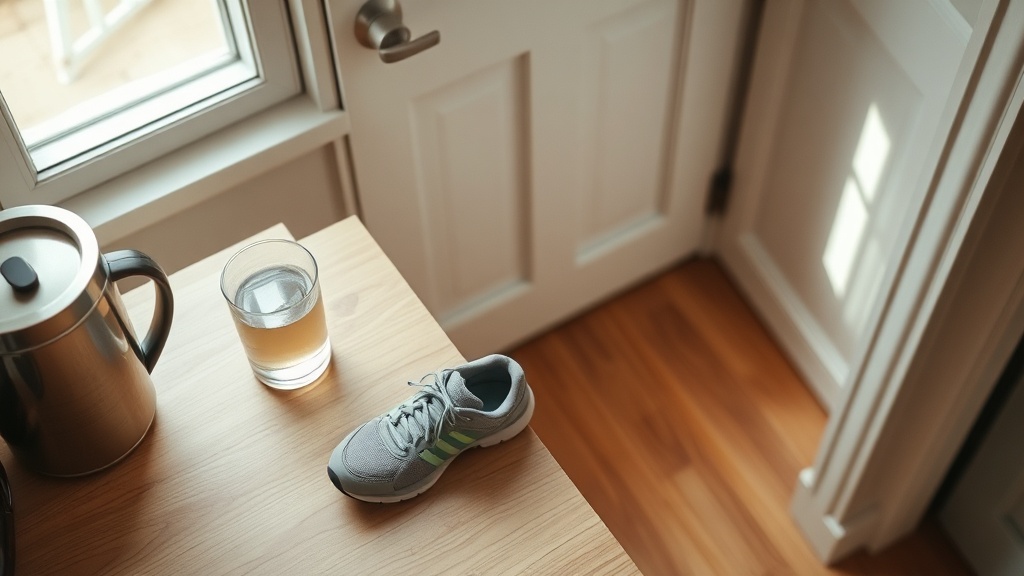
Hydration is good. Making it complicated is bad. I fill one glass the night before and drink it while my coffee brews. Takes 30 seconds.
3. The "Put On Your Shoes" Rule.
I don't commit to a workout. I commit to putting on my shoes and stepping outside. That's it. If I want to turn around and come back in, I can. (I never do. But I could.)
4. Ten minutes of movement, minimum.
5. No phone for the first 15 minutes.
This is the hardest one, and I still fail sometimes. But when I succeed, I'm not comparing my groggy self to someone's highlight reel.
The 2026 Shift: From "Tracking" to "Programming"
Here's some good news from the trend reports: The industry is slowly moving away from "more is better" toward something smarter. ACSM notes that trainers are shifting from "tracking" to "programming"—meaning workouts planned around actual recovery and sustainability, not just burning calories.
Gold's Gym's 2026 trend report says it plainly: "When you know how your body is recovering, you can plan each workout for consistent, long-term progress."
This is what I mean by systems. Your body isn't a machine to be optimized. It's a living system that needs rest, variety, and—this is radical—joy.
What This Means For You
If you're currently beating yourself up because you can't stick to a 90-minute morning ritual involving cryotherapy and journal prompts, listen up:
You are not broken. The system is.
The person posting their 4 a.m. routine has a different life than you. Maybe they don't have kids. Maybe they do have kids but have a partner who handles mornings. Maybe they're miserable and performing wellness to cope. You don't know. You can't know.
What you can know is this: Consistency beats intensity. Always.
A 10-minute walk every morning for a year changes your life more than a month of ice baths followed by six months of nothing because you burned out.
The Litmus Test
Before you adopt any morning habit, ask yourself:
- Can I do this when I'm sick? (If no, it's too extreme.)
- Can I do this when I only got 4 hours of sleep? (If no, it's too demanding.)
- Would I do this on vacation? (If no, it's not a habit—it's a chore.)
- Does this cost money I don't have? (Ice baths shouldn't require a second mortgage.)
If your morning routine fails these tests, it's not sustainable. And if it's not sustainable, it's not a routine—it's a phase.
Final Thought
Look, I get the appeal. The extreme morning routine feels like control in a chaotic world. It feels like if you just suffer enough, you'll finally be the person you want to be.
But here's what I've learned losing 40 pounds while working 60-hour weeks: The person you want to be isn't a superhero. They're just someone who shows up, day after day, even when it's boring. Especially when it's boring.
You don't need an ice bath. You need a streak you don't break.
Now go drink your water.
Want to build a morning routine that actually sticks? Start with my First 30 Days guide—no ice required.